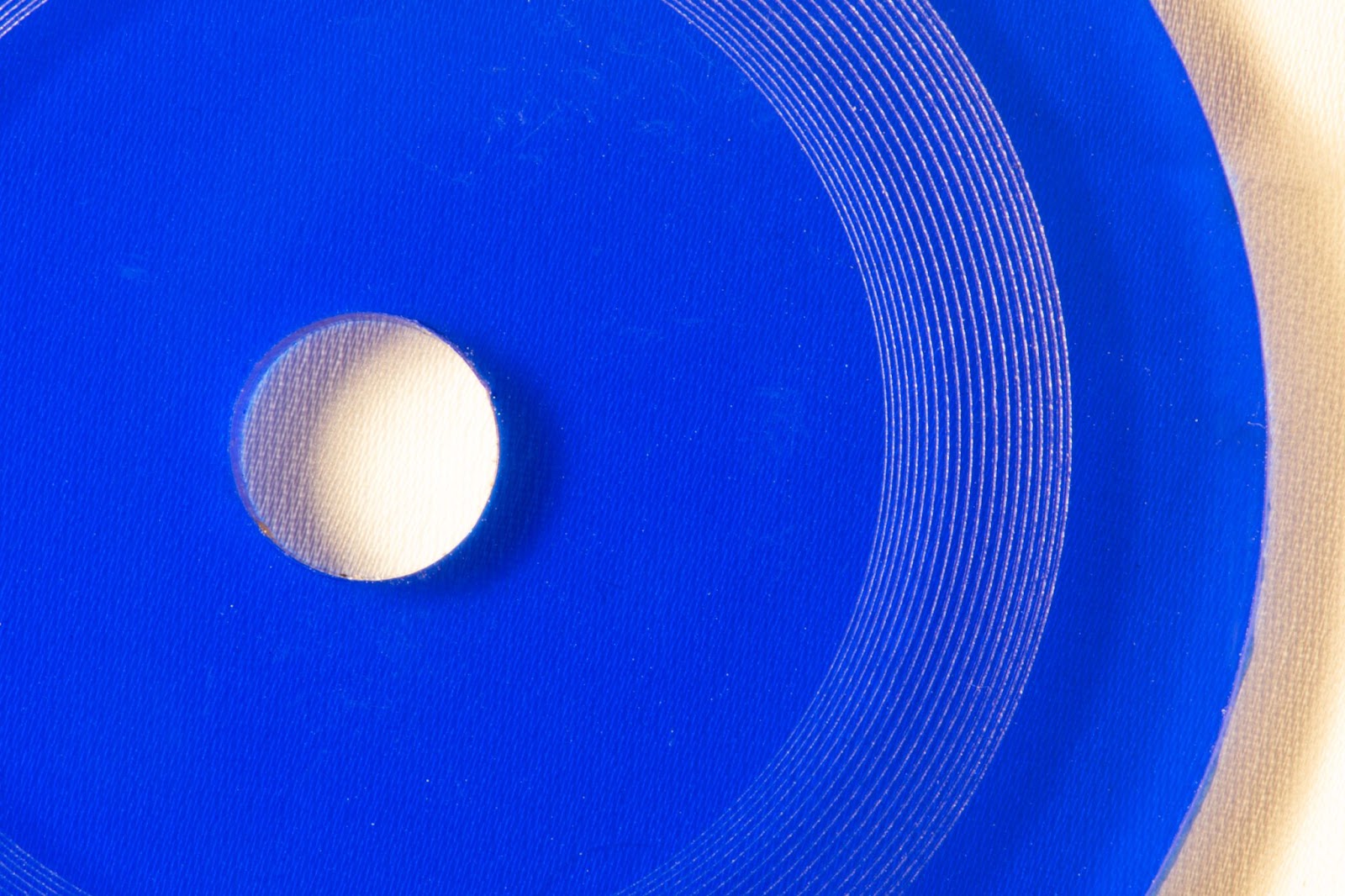
diamond turning records by hand
· electronics, misc
this is a fun one. For the 2025 ASPE student challenge, we were tasked with making a small machine for cutting records onto an acrylic disc. the way the challenge worked was that teams were supplied with a voice coil, optical position sensor, micrometer, flexures, and a MyRIO FPGA board. Whenever teams arrived to the ASPE conference in San Diego, the spindles, discs, diamond cutting tools, and spindle control programs would be supplied. before the conference, we were encouraged to build a positioning system with those components and figure out error budgets and stuff. That part was easy, the hard part came from trying to get audio to play through the system. The pre-packaged program that we were supplied with had 2 components, one for turning a .wav file into a .csv file, and another for reading those csv files at a certain sample rate as voltages to send to the voice coil.
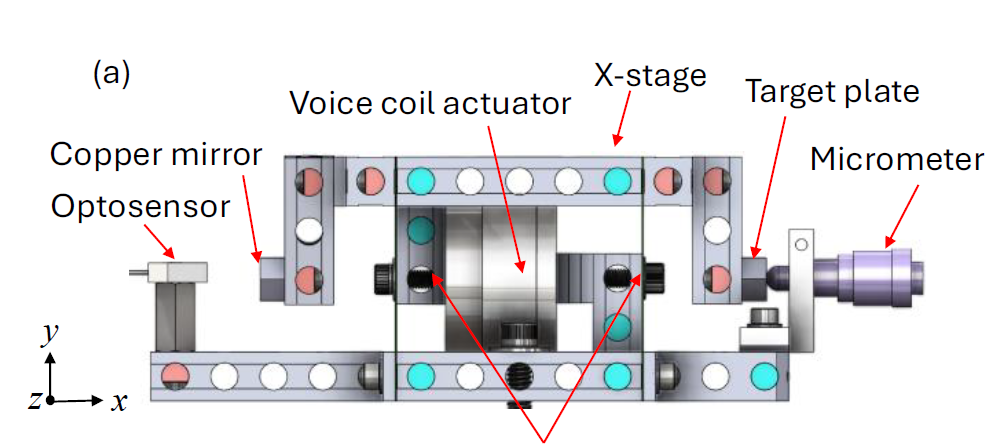
the plan was to figure out a compensation curve for the voice coil using the optical sensor, figure out a calibrated ramp signal to send to the voice coil, then add that ramp signal to the modulated voltages from the music. so basically like a .csv file with at each point having:
\[ V_{ramp}*f(x)_{calibration} + V_{music}*k_{amplification} \]we got it mostly working, but without a spindle there was no way to know for sure if it would work. We could hear music though, and it moved as well. come competition time, everything made it to San Diego safely and we got everything built. The spindles were supplied and we were able to begin working at around 7 PM. The challenge was supposed to end at midnight.
the only issue was that no one had actually got the spindle control programs and the cutting programs to work together, and we were only supplied the one MyRIO. Turns out, everyone had an absolute nightmare trying to integrate the 2 systems. especially taking into accould the length of time provided, this was a huge challenge. The spindle program did not want to work at the same time as the csv-to-voltage program, or really any other fpga program. given more time, we could probably figure out a good way to deal with it within labview. However, with the time aspect, we chose to instead literally take matters into our own hands.
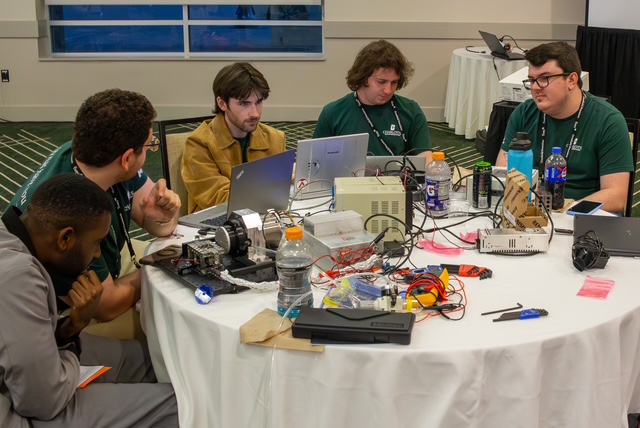
hypothetically, we could just take the small analog audio voltage from a computer aux port and amplify it into the voice coil to cut the musical signal. i split open the DAC-ADC box and found the internal part of the circuit connecting the DAC to it's amplifier to the voice coil. I took an old aux cord and cut off one end. Next, I took the open end of the cord and attached it to the internal screw terminals that would normally be for the DAC to connect. i plugged the aux cord into the laptop, fired up youtube, and lo and behold the positioning stage was audibly playing music. instead of trying to debug someone elses labview FPGA program, I opted to instead get us to manually cut the record using the supplied micrometer that was there for calibration, and use the working spindle control program to just control the spindle. we got a system going where I controlled the micrometer position, someone else controlled cut depth manually to account for tool misalignment, someone else started and stopped the spindle, and another person controlled the heating of the cutting tool manually by plugging in and unplugging the heating element. every single aspect of the system was being manually controlled by a human being.
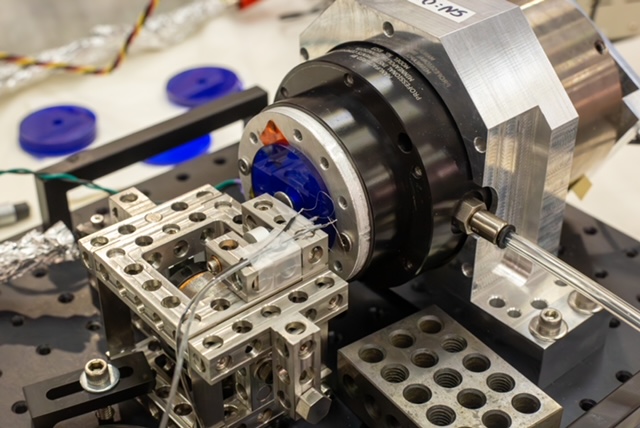
it worked! hilariously, we cut one of the better musical records for the challenge. We did not win the challenge with this method, as scoring was based on much more than just cutting a record. however, I am completely sufficient with having cut a decent record given the circumstances. Some teams were not able to cut anything at all, so I'll take it. We ended up walking out of the room at 4:30AM san diego time, or 7:30AM charlotte time.